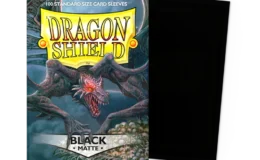
Some people start protecting their cards after pulling a valuable one. Others learn the hard way when a favourite deck starts developing cloudy corners. Either way, card protection does not need to become a second, expensive hobby.
The trick is to match storage to the job. A deck you shuffle every Friday faces different risks from a card that stays in a binder for months. Treating both exactly the same usually wastes money.
The first enemy is handling, not a spectacular accident
Cards pick up wear from repeated shuffling, rough tables, moisture and poor storage habits. A useful basic setup starts with clean hands and a clean playing surface. Put the cards into correctly sized sleeves before they start making regular trips between home and game night.
For most standard-size TCG cards, a dependable outer sleeve is the biggest practical improvement per rand spent. The right pack size matters: 100 standard sleeves will cover one 100-card Commander deck but leave no replacement sleeves.
Spend on the cards you actually use
Regular players should focus first on sleeves and a sturdy deck box. Protecting a full deck keeps the cards consistent during play and stops loose corners catching on each other. If you play Yu-Gi-Oh!, make sure you buy Japanese-size sleeves instead of assuming a standard MTG sleeve will fit neatly.
If you want to compare finishes before buying, start with our Dragon Shield sleeve guide. It explains the everyday reasons to choose Matte, Dual Matte, Art or Perfect Fit sleeves.
When double-sleeving makes sense
A tight-fitting inner sleeve plus a compatible outer sleeve adds another layer between the card and the world. It can be especially appealing for a deck containing cards you would hate to replace. It also adds bulk. That means the deck box you bought before double-sleeving might suddenly feel too small.
Double-sleeving isn’t a magical shield. Don’t store cards where heat, damp or sustained pressure can damage them. Even a beautifully sleeved collection can suffer in a hot car or a damp cupboard.
A binder is for browsing, not for everything
Binders make a collection easier to view and organise. They are especially useful for trade stock, complete sets or favourite illustrations. Choose a binder format that matches your collection size and whether you plan to move cards frequently. Different Card Codex models have different capacities; a big number in the product title refers to card storage capacity, not the parcel dimensions.
For high-value cards, pay attention to how pages hold the cards. Avoid forcing multiple cards into a pocket designed for one. If you’re using a ring binder, check that the rings aren’t pressing on the pages when the binder is closed.
Deck boxes and long-term storage
A deck box earns its keep if it protects cards during travel and prevents them from spilling into a bag. Capacity claims vary with single and double sleeving, so check a particular box’s specification before trusting an advertised number. For larger collections, organised storage drawers or card boxes make sorting less of a wrestling match.
Keep your system simple: playable decks in deck boxes, display or trade collections in binders, and bulk commons organised where they won’t be crushed. Labeling the boxes can save more time than buying a premium product you’ll never fill.
What is the cheapest sensible buying order?
Properly sized sleeves for the cards you play.
A deck box for decks that leave the house.
A binder once your collection is large enough to browse.
Inner sleeves for decks or cards where the extra handling protection is worthwhile.
Larger storage once your collection starts outgrowing its current home.
It’s tempting to buy the entire accessory aisle on day one. Resist it. Buy what solves a real annoyance now, then upgrade when your collection gives you a reason.
Build a setup that fits your collection
Browse Tabletop accessories, including sleeves, binders and deck boxes. Check the size and capacity of each item before ordering; your cards deserve an accurate fit more than a dramatic product description.
A Magic release date is simple until you add approximately 9,000 kilometres, international distribution, customs, local couriers and a group of people waiting for Commander decks.
Preordering Magic: The Gathering in South Africa is not particularly complicated, but there are a few differences between a global release date, a local stock arrival and the day a parcel actually leaves for your door.
Understanding those differences makes preorders much less stressful. Before ordering, check the exact product’s estimated dispatch date rather than treating the global release day as a courier promise. Our MTG product-type guide explains what comes in Commander decks, bundles and Draft Night products, while the card protection guide will help you prepare for the cards when they arrive.
What is an MTG preorder?
A preorder lets you place an order for a Magic product before its official release.
For example, Magic: The Gathering | Star Trek has a confirmed global tabletop release date of 13 November 2026.
Customers do not have to wait until 13 November to place an order.
Retailers can make allocated products available beforehand so customers can reserve stock from the quantity the store expects to receive.
That is particularly useful for products with limited supply or strong early demand.
When do I pay for a preorder?
At Bell & Barter, preorders are placed through the normal checkout process.
Unless a specific product page states a different arrangement, payment is taken when the preorder is placed.
This reserves the order against the stock Bell & Barter expects to receive.
Always read the individual product page before checking out because product specific information takes priority over a general guide like this one.
What does the release date mean?
The release date is the date on which the publisher officially releases the product for sale.
It is not always the same thing as:
the date stock reaches South Africa
the date stock reaches a particular retailer
the date your order is packed
the date a courier collects your parcel
or the date it reaches your door
This distinction matters particularly with internationally distributed products.
A global release can happen on a Friday while stock moving through a particular regional distributor arrives slightly before or after that date.
What is an expected dispatch date?
A dispatch date is much more useful for a South African customer than a global release date.
It refers to when the retailer expects to be able to send the order.
At Bell & Barter, where we have product specific information about expected release or dispatch timing, we display it on the product page.
That information should be treated as the most current estimate available for that product.
If a publisher moves a release or the distributor gives us updated timing, the expected local dispatch can move with it.
Why can South African release timing differ?
Magic products move through an international supply chain.
Depending on the product, that can involve:
manufacturing
international distribution
regional allocation
international freight
customs processing
local distribution
delivery to the retailer
final courier delivery
Most releases move through that chain without becoming an adventure.
Occasionally, something takes longer than expected.
A global release date does not make aircraft, customs queues or couriers disappear.
What is allocation risk?
Retailers do not always receive unlimited quantities of every Magic product.
For high demand or limited products, distributors may allocate stock.
A retailer might request a certain quantity and later receive confirmation that only part of that quantity is available.
That is called an allocation.
Good preorder management is therefore not simply about listing unlimited stock before launch.
It is about keeping preorder quantities aligned as closely as possible with expected supply.
Bell & Barter only intends to sell stock we reasonably expect to receive.
If an unexpected allocation reduction means we cannot fulfil an affected preorder, we will contact the customer with the available options rather than quietly substituting another product.
Can release dates change?
Yes.
Publishers can change release dates.
Distributors can update regional arrival estimates.
International freight can move.
The correct approach is not to pretend dates can never change.
It is to distinguish between:
confirmed publisher release dates
and
estimated local dispatch timing
We update product information when meaningful confirmed changes are received.
Where a change materially affects an existing Bell & Barter preorder, affected customers should receive an update rather than having to discover it by repeatedly checking the website.
How does Bell & Barter communicate preorder information?
The individual product page is the first place to look.
Where applicable, Bell & Barter displays:
preorder status
release date
expected dispatch information
product options
current availability
If something changes after you have already ordered and that change materially affects fulfilment, we use the contact information attached to the order to communicate with affected customers.
That is another reason to make sure the email address entered during checkout is correct.
What happens if I order an in-stock item together with a preorder?
This depends on how the order is being fulfilled and should be checked against the shipping information presented at checkout.
As a general rule, remember that an order containing a future release cannot be fully dispatched before the future product is available unless the order is deliberately split.
If receiving an in-stock product immediately is important to you, placing it as a separate order is often the cleanest option.
Why preorder locally instead of importing the product yourself?
Sometimes importing directly makes sense.
But the sticker price on an international website is not necessarily the final South African cost.
A personal import can involve:
international shipping
exchange rate movement
VAT
customs charges where applicable
courier clearance or administration fees
longer delivery distances
more complicated returns
limited local support if something goes wrong
That does not mean every overseas order is bad.
It means a fair comparison should be between the landed cost and experience, not simply the foreign shelf price converted into rand.
What are the advantages of a local MTG preorder?
A South African preorder gives you a local transaction with a South African retailer.
For Bell & Barter customers, that means:
pricing in rand
local checkout
local customer support
South African delivery
no personal customs clearance process for the individual order
a single retailer to contact if there is an issue with fulfilment
For many customers, that certainty matters as much as saving a few rand on a converted foreign price.
When should I preorder?
If the product is something you definitely want and stock is allocated, waiting for release day carries a risk that it sells out before then.
If you are unsure whether you actually want the product, do not preorder because of artificial urgency.
Read what is included.
Compare the versions.
Decide whether the product makes sense for you.
Then order.
We would rather have an informed customer than a rushed one.
Where can I see current Bell & Barter preorders?
You can browse current and upcoming products on the Bell & Barter Pre Orders page.
Important publishing note: The complexity assessments below are Bell & Barter’s preliminary assessment based on Wizards’ confirmed mechanics.
There are four Magic: The Gathering | Star Trek Commander decks, and they are not simply four different boxes containing the same style of game. Picking by faction is part of the fun; picking by the way you want to play matters just as much. After choosing, compare sleeves for a 100-card Commander deck and read our South African preorder explanation so the release date and dispatch window aren’t confused.
Each is built around a different faction, commander and gameplay idea.
If you are trying to decide which one deserves a place at your table, this comparison focuses on what actually matters:
playstyle, complexity, theme, commander and the type of player each deck appears best suited to.
The quick answer
Deck
Core playstyle
Expected complexity
Lead character
Best for
Federation Fleet
Crew and starship synergy
Medium
Jean-Luc Picard
Engine and value players
Landing Party
Landfall and resource development
Medium
Commander Spock
Players who enjoy lands and gradual growth
Klingon Fury
Aggressive multiplayer combat
Low to Medium
Worf
Combat focused players
We Are the Borg
Tokens and assimilation
Medium
Borg Queen’s Collective
Token and board presence players
These complexity ratings are our preliminary assessment based on Wizards’ published descriptions. Full decklists may reveal additional layers once they are released.
Federation Fleet
Playstyle
Federation Fleet appears to be about assembling a capable crew and using Seek Out abilities to strengthen that crew while powering your starships.
That suggests a synergistic deck where individual pieces become more useful when working together.
Rather than asking only “How much damage can I do this turn?”, Federation Fleet appears likely to reward players who think about developing their board and building toward stronger turns.
Complexity
Expected complexity: Medium
The basic concept is easy to understand, but managing crews, Seek Out effects and starships should create more decisions than a straightforward combat deck.
That is not necessarily difficult.
It simply means the deck may reward players who enjoy figuring out how several systems interact.
Theme
This is the Federation deck.
Jean-Luc Picard, crews, vessels and the organised machinery of Starfleet are central to its identity.
If your ideal Star Trek Commander deck should feel like commanding a functioning starship and its crew, this is the natural starting point.
Wizards has confirmed that the deck rewards you for attacking multiple enemies, with your Warriors becoming stronger as you spread combat across the table.
That makes excellent sense in Commander, where you normally have several opponents available to attack.
Complexity
Expected complexity: Low to Medium
Its central objective appears more straightforward than the other decks.
That does not mean there will be no meaningful decisions.
Commander combat can become complicated quickly, especially when deciding which opponent to pressure and how widely to spread your attackers.
But if you want a deck whose basic game plan is clear from the beginning, Klingon Fury currently looks like the strongest candidate.
Theme
Klingons.
Warriors.
Worf.
Combat.
There is no mystery about what this deck is trying to communicate.
Commander
Worf
Who should choose Klingon Fury?
Choose Klingon Fury if you:
love attacking
prefer proactive games
enjoy creature combat
want a game plan that is easy to understand
think every Commander game could benefit from more Klingons
Choose Landing Party for lands and resource growth.
Choose Klingon Fury for combat.
Choose We Are the Borg for tokens and assimilation.
There is no objectively correct choice.
Commander is one of the most personal formats in Magic. The deck whose game plan makes you want to shuffle up and play is usually a better choice than the one somebody else tells you is “best”.
And if the reason you choose your deck is simply because Picard, Spock, Worf or the Borg are your favourite part of Star Trek, that is a perfectly good Commander decision too.