
Beadle & Grimm’s Character Class Dice: Which Tin Fits Your D&D Character?
Every roleplaying group knows that one player who borrows a die, then another, then a third because their spell happens to need exactly that many. Beadle & Grimm’s Character Class Dice are an unusually charming response to that problem: give each class a set with a mixture designed around the kind of rolls its players often make.
The tins are beautifully illustrated, but the important detail is inside them. Not every class has the same dice mix.
What’s in a Character Class Dice tin?
The manufacturer describes resin polyhedral dice in an embossed tin with an EVA lining, designed to work as a rolling tray. There are different mixtures for different classes, often combining a familiar basic assortment with extras that suit common class abilities. The colour combinations and number of dice also vary.
That makes them a different kind of gift from a seven-die starter set. You’re buying a specific selection of dice and an object that belongs on a fantasy gaming table.
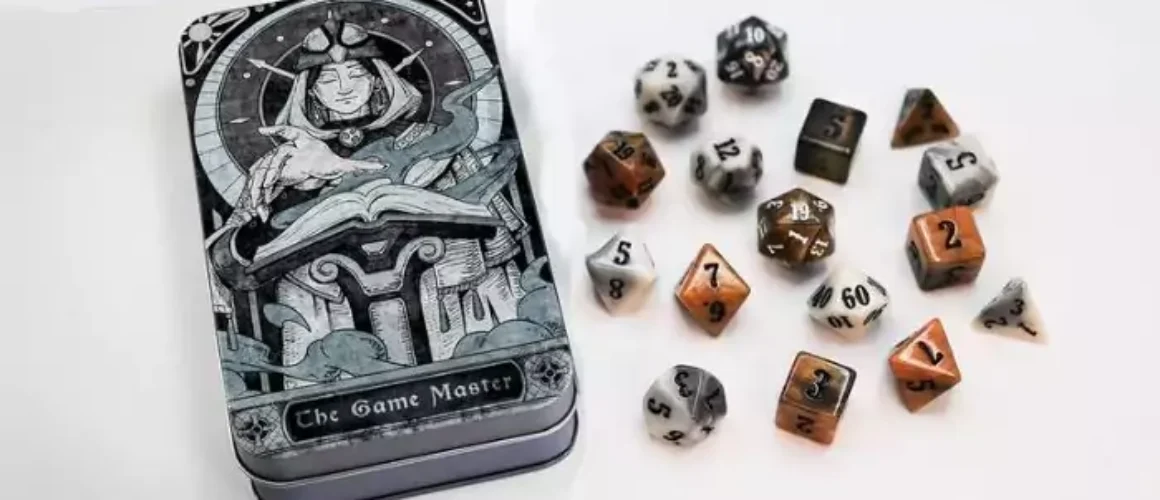
The Game Master: the busiest person at the table
The Game Master set contains 16 dice. Beadle & Grimm’s official contents include multiple d6 and d8 dice, a second d20 among the main colour groups, plus two additional special d20s. It makes sense for someone who is routinely rolling for several creatures or switching between different effects.
It’s not that a game master needs a separate set. It’s that having the relevant dice within reach can make a busy combat encounter smoother.
Fighter: the sound of dice hitting the tray
The Fighter tin contains 15 dice according to the maker, with additional d8s and d10s in its mix. That’s a practical contrast with buying a single standard set. Fighters can have abilities and equipment choices that use different dice, but check your particular character build rather than assuming every Fighter rolls the same combination.
Wizard, Cleric, Rogue and friends
The Wizard and Rogue sets in the Bell & Barter range contain 16 dice each. The Cleric, Ranger, Barbarian, Sorcerer, Druid, Monk, Warlock and Alchemist sets contain 14, while the Bard and Paladin sets have 15. The counts tell you these are genuinely different assortments; they don’t by themselves tell you which is right for your character.
Look at your spell list or character features. Are you commonly rolling several of the same die? Are you making attack rolls and saving throws? Do you spend sessions mostly improvising conversations? A dedicated tin is fun in any case, but it’s most convenient when its dice match your actual habits.
How should you choose a gift?
If you know the recipient’s current character class, start there. If you’re buying for the person who organises sessions, runs enemies and keeps the story moving, the Game Master set is a more obvious fit. If the player switches characters constantly, ask whether they prefer a particular class before surprising them with a tin.
Remember that class-specific sets are tools, not official class requirements. D&D can be played with an ordinary polyhedral set, shared dice or suitable digital rollers. These are accessories for people who enjoy the physical ritual.
What about the tin itself?
The EVA lining makes the tin useful for rolling, although the feel and sound of the dice will vary with the surface underneath. Keeping all the dice in one labelled tin is also pleasantly practical when game night ends in a frantic pack-up.
The product’s external tin dimensions should not be confused with its packed shipping dimensions. Check the listing for the exact dice count and photographed artwork rather than judging by the class name alone.
See the range
Browse Character Class Dice at Bell & Barter. If you’re new to roleplaying, our dice shapes explainer and first-session checklist will help with the basics before you choose your favourite tin.
Official source: Beadle & Grimm’s dice range and individual class product pages.