
Best First Board Game? Five Questions That Save You a Bad Game Night
There is a particular kind of disappointment that comes from buying a lovely-looking board game, inviting friends around, and discovering that everyone wants to go home before you’ve finished explaining the rules. The game might be excellent. It simply wasn’t the right game for that table.
Before looking up somebody else’s top ten board games, answer five questions about the people who will actually play with you.
1. How many people turn up on an ordinary evening?
Not how many friends said they’d love to come round. How many reliably appear? A game designed for a large group may be a poor purchase for two people at home. Conversely, a long strategy game that works beautifully with two could stall a bustling birthday gathering. Player count is one of the first specifications worth reading.
If you’re buying for a couple, look beyond the marketing image of a full table. Check the minimum player count and whether the game includes a dedicated two-player mode or scales naturally.
2. Are you buying an evening of laughter or an evening of decisions?
Party games invite interaction and quick reactions. Strategy games often reward thinking several turns ahead. Cooperative games ask players to solve a shared problem; competitive games ask them to pursue their own result. Every style can be brilliant, and every style can be miserable for the wrong audience.
If somebody at your table hates direct confrontation, look at games where you compete over opportunities instead of attacking one another. Sanctum is a useful example: players pursue their own hero development and a shared final threat rather than spending the evening destroying each other’s characters.
3. How much explanation will the group tolerate?
A game’s box might promise thirty minutes of play, but that doesn’t necessarily include learning it. Consider your group’s appetite for new rules. Some people love discovering intricate systems; others want to start moving pieces after five minutes. Neither preference is a character flaw.
For a newer group, look for a clear central decision and mechanics that become understandable after a few turns. Save the dense, multi-system strategy games until everybody is actively asking for that sort of challenge.
4. What does the theme ask you to imagine?
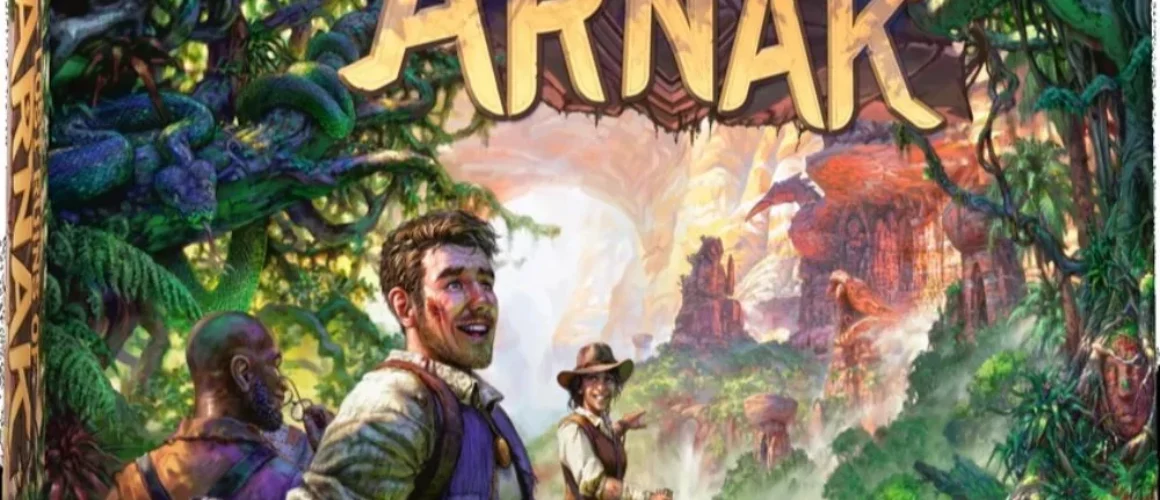
In Lost Ruins of Arnak, the premise is exploration. You acquire useful cards, commit explorers to locations and make difficult resource choices. Czech Games Edition describes it as a combination of deck-building and worker placement. The archaeological theme gives those decisions a sense of purpose.
In Sanctum, the hook is character progression and a looming Demon Lord. It borrows ideas from hack-and-slash video games. If your group loves loot, spells and fantasy battles, that hook can be much easier to explain than a dry list of mechanisms.
Theme won’t save bad pacing, but it absolutely helps people care about their decisions.
5. What should happen after the first play?
Do you want something to teach once and bring out repeatedly? A game with several strategic routes can reward repeat plays as people learn the system. Do you want a one-night event with surprises and a story to talk about afterwards? That suggests a different style.
Don’t confuse complexity with replay value. Simple choices can stay interesting for years when the other players keep changing your plans.
A quick matching table
| Your group wants… | Look for… |
|---|---|
| Something social after dinner | Party or light card games |
| A challenge to solve together | Cooperative games |
| Progression, loot and character builds | RPG-inspired strategy games such as Sanctum |
| Planning, engines and clever resource choices | Strategy games such as Lost Ruins of Arnak |
| A shorter, repeatable match | Card and compact strategy games |
The Bell & Barter buying approach
Buy for the group you have, not the group you wish you had. Read the player count, estimated playing time and whether the box is a full game or an expansion. If possible, watch the first few turns of a rules explanation. A good game night starts long before the first card is drawn.
Explore our board games and read the Sanctum versus Arnak comparison for two very different strategy experiences.
Game mechanics cross-checked with Sanctum and Lost Ruins of Arnak publisher pages.